
Blog Detail
CPCB IV+ Emission Norms: What They Mean for Used Generators
Posted On 10 May 2025
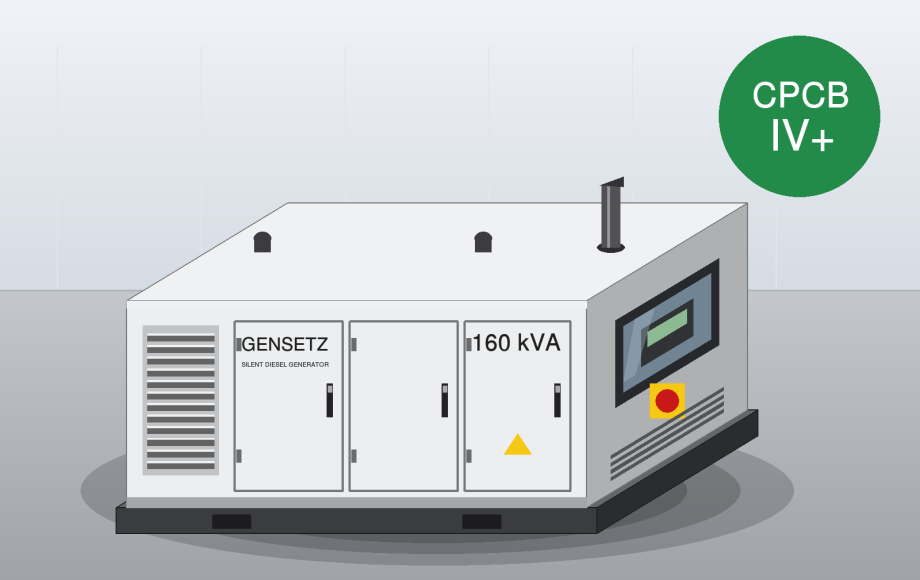
India's move to tighter emission norms for diesel generator sets has changed the new-genset market, and buyers of used sets often ask how the rules affect them. This article gives a plain-language overview of the CPCB IV+ norms and the practical questions to ask when buying a used generator. It is general information, not legal or regulatory advice.
What are CPCB emission norms?
Emission standards for diesel generator sets in India are notified by the Ministry of Environment, Forest and Climate Change (MoEFCC), and the Central Pollution Control Board (CPCB) is closely associated with them — which is why the stages are commonly called "CPCB II", "CPCB IV+" and so on. The norms limit pollutants from the engine exhaust, including oxides of nitrogen (NOx), hydrocarbons, carbon monoxide and particulate matter.
Each new stage has set stricter limits than the one before. Generator sets produced to earlier stages, such as CPCB II, remain widely installed across the country.
What changed with CPCB IV+?
The CPCB IV+ stage came into force in 2023 for new diesel generator sets up to 800 kW. Compared with earlier stages, it significantly tightens the permitted emission levels. To meet these limits, manufacturers have generally introduced:
- Electronically controlled fuel injection systems in place of purely mechanical systems
- Improved combustion and engine management
- Exhaust after-treatment in some models, depending on the engine and rating
- Type approval and conformity-of-production requirements, with emission compliance labelling on the product
For buyers, this has typically meant higher prices for new sets, more electronics to maintain and a greater need for trained service support. It is one reason why demand for good-quality used gensets remains strong.
How does this affect used generators?
Emission norms primarily govern the manufacture and sale of new generator sets. Sets built before a stage came into force were made to the norms applicable at that time. However, how older sets may be used, relocated or installed can also depend on other rules and local conditions, for example:
- State and local requirements: State Pollution Control Boards and local authorities can impose conditions on DG set installation and use, such as stack height, acoustic enclosures and consent requirements.
- Air-quality restrictions: in some regions — notably Delhi-NCR under the Graded Response Action Plan (GRAP) — the use of diesel generator sets can be restricted during periods of poor air quality, with conditions and exemptions that are revised from time to time.
- Retrofit and dual-fuel options: in certain areas, authorities have encouraged retrofitted emission control devices or dual-fuel (gas and diesel) conversions for existing sets.
- Larger sets: the CPCB IV+ stage covers sets up to 800 kW. Requirements for larger sets are set out separately, so check them specifically.
Because these rules differ by location and are updated periodically, always confirm the current requirements for your site with the relevant authority or a qualified consultant before buying.
Questions to ask the seller
- Which emission stage was the set manufactured to? Is there a compliance label or certificate?
- What is the year of manufacture on the engine and generator nameplates?
- Has the engine or fuel system been modified, and are there records?
- Is a retrofit emission control device or dual-fuel kit fitted? If so, which make and model, and is there supporting documentation?
- Is an acoustic enclosure included, and in what condition?
- For CPCB IV+ sets: is the electronic control system working without active fault codes, and is service support available in your area?
Questions to ask yourself
- Where will the set be installed, and what local rules apply there?
- Is the set for standby use or for regular prime power?
- Do you have access to technicians who can service the engine's fuel and control systems?
- Would a retrofit device or dual-fuel conversion be expected or useful at your site?
Using GENSETZ
Sellers on GENSETZ upload a nameplate photo with every listing, which helps you confirm the make, model and year of manufacture before you enquire. Use your enquiry to ask about emission stage and documentation, and verify everything during your physical inspection.
Disclaimer: Regulations change and vary by location. This article is for general information only. GENSETZ does not certify the emission compliance of any listed generator. Please consult the relevant authorities or a qualified professional for advice specific to your installation.
Related post
How to Choose the Right kVA Rating for Your Business
Buying a generator that is too small leads to tripping, voltage dips and a set that is constant...
15 Mar 2026
Checklist for Inspecting a Used Diesel Generator
A well-maintained used diesel generator can give years of dependable service at a fraction of t...
14 May 2026
Understanding Running Hours, Overhauls and Load Tests
When buyers compare used gensets, the first number they usually ask for is the running hours. H...
13 May 2026
AMF Panels and Generator Synchronisation Explained
Many used generator listings mention an "AMF panel" or a "synchronising panel". Both add real v...
12 May 2026